AI Powered Financial Management for Entrepreneurs
Discover how AI can streamline financial management, budgeting, and forecasting for entrepreneurs and small businesses.
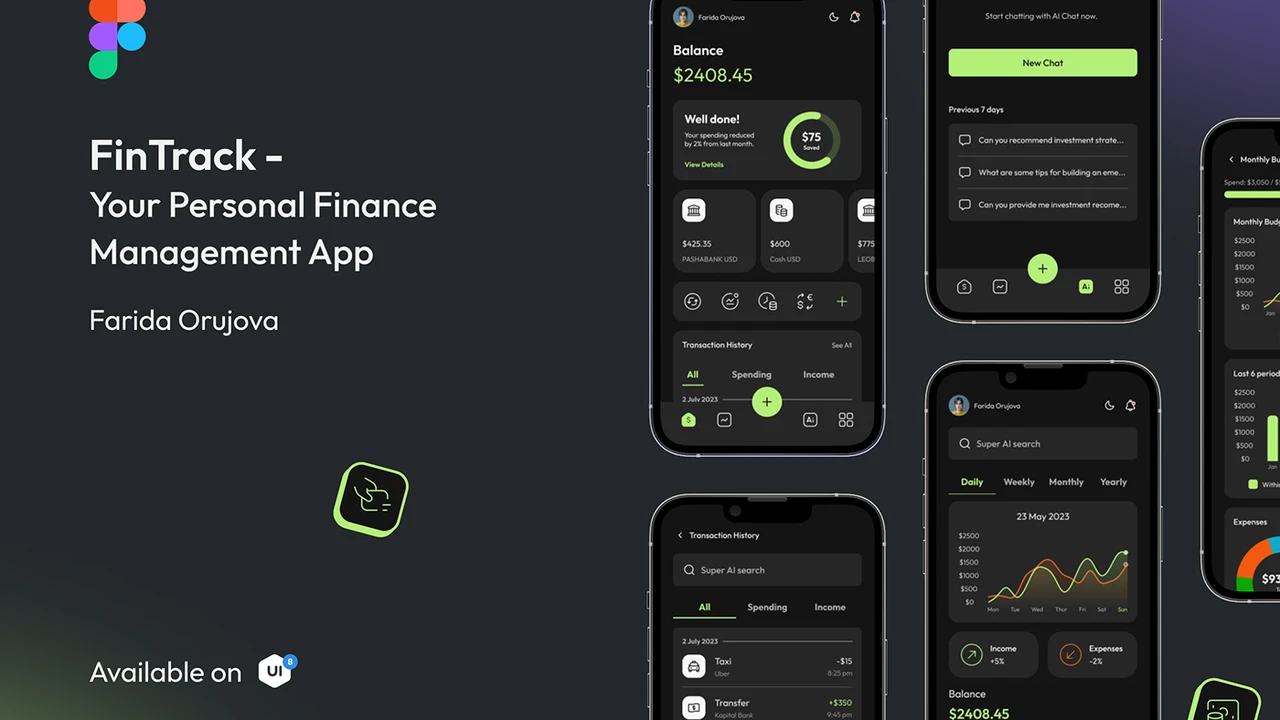
Discover how AI can streamline financial management, budgeting, and forecasting for entrepreneurs and small businesses.
AI Powered Financial Management for Entrepreneurs
Hey there, fellow entrepreneurs and small business owners! Let's talk about something that often feels like a necessary evil but is absolutely crucial for your business's survival and growth: financial management. For many of us, especially when we're just starting out or running a lean operation, the thought of budgeting, forecasting, and keeping track of every penny can be daunting. It's time-consuming, complex, and let's be honest, not always the most exciting part of building your dream. But what if I told you there's a game-changer out there that can make all of this not just manageable, but actually insightful and even, dare I say, a little bit exciting? I'm talking about AI-powered financial management tools.
Artificial Intelligence isn't just for fancy tech companies anymore. It's rapidly becoming an indispensable ally for individuals and small businesses looking to optimize their operations, and financial management is a prime area where AI shines. Imagine having a super-smart assistant that can analyze your spending patterns, predict future cash flow, identify potential financial risks, and even suggest ways to save money or increase revenue. That's the power of AI in your financial toolkit.
In this deep dive, we're going to explore how AI can transform your financial management, making it more efficient, accurate, and strategic. We'll look at specific tools, their features, use cases, and even talk about pricing so you can make an informed decision for your business. Get ready to ditch the spreadsheets and embrace a smarter way to handle your money!
Understanding AI in Financial Management for Small Business Owners
So, what exactly does AI bring to the table when it comes to managing your finances? Think of AI as a super-powered data analyst that never sleeps. It can process vast amounts of financial data much faster and more accurately than any human ever could. This isn't just about crunching numbers; it's about finding patterns, making predictions, and offering actionable insights that can genuinely impact your bottom line.
Automated Data Entry and Categorization with AI Accounting Software
One of the biggest time-sinks in financial management is manual data entry. Recording every transaction, categorizing expenses, and reconciling accounts can eat up hours of your precious time. AI-powered tools automate much of this. They can connect directly to your bank accounts, credit cards, and payment processors, automatically importing transactions. Even better, they use machine learning to categorize these transactions, often learning from your past actions to become more accurate over time. This means less time spent on tedious tasks and more time focusing on what you do best.
Enhanced Budgeting and Expense Tracking with AI Powered Tools
Budgeting is the cornerstone of good financial health, but it can be tough to stick to. AI tools take budgeting to the next level. Instead of just setting static limits, they can analyze your historical spending and income to create more realistic and dynamic budgets. They can also track your expenses in real-time, alerting you when you're approaching limits or identifying areas where you might be overspending. Some even offer personalized recommendations for cost-cutting based on your specific business operations.
Accurate Financial Forecasting and Cash Flow Prediction with AI
Predicting the future is impossible, right? Well, AI gets pretty close when it comes to your finances. By analyzing historical data, market trends, and even external factors, AI algorithms can generate surprisingly accurate financial forecasts. This is invaluable for entrepreneurs. Knowing your projected cash flow allows you to make informed decisions about investments, hiring, and expansion. It helps you anticipate potential shortfalls and plan accordingly, preventing nasty surprises down the road.
Fraud Detection and Risk Management with AI Financial Solutions
Small businesses are often targets for fraud, and identifying suspicious activity manually can be like finding a needle in a haystack. AI tools are excellent at pattern recognition. They can flag unusual transactions, identify potential fraudulent activities, and alert you to security risks much faster than traditional methods. This added layer of security can save your business from significant financial losses and protect your reputation.
Personalized Financial Insights and Recommendations for Entrepreneurs
Beyond just reporting data, AI can act as your personal financial advisor. It can identify trends you might miss, such as seasonal fluctuations in revenue, opportunities for tax deductions, or areas where you could optimize your pricing strategy. Some tools even offer personalized recommendations for improving your financial health, like suggesting better ways to manage debt or invest surplus cash. This proactive approach can be a game-changer for strategic decision-making.
Top AI Powered Financial Management Tools for Small Businesses and Entrepreneurs
Alright, let's get down to brass tacks. What specific tools are out there that can help you harness the power of AI for your financial management? Here are a few top contenders, each with its own strengths and ideal use cases.
QuickBooks Online Advanced with AI Features for Comprehensive Financial Management
QuickBooks is a household name in small business accounting, and their 'Advanced' tier has been beefing up its AI capabilities. It's a comprehensive solution that goes beyond basic bookkeeping.
- Key AI Features:
- Automated Categorization and Reconciliation: QuickBooks uses AI to learn how you categorize transactions, making future categorization faster and more accurate. It also helps with bank reconciliation by matching transactions automatically.
- Smart Reporting: AI helps generate customizable reports with deeper insights into your financial performance, identifying trends and anomalies.
- Cash Flow Forecasting: While not as advanced as dedicated forecasting tools, QuickBooks offers some AI-driven cash flow insights based on your historical data.
- Expense Management: AI assists in tracking and categorizing expenses, making it easier to manage budgets and prepare for tax season.
- Use Cases: Ideal for small to medium-sized businesses that need a robust, all-in-one accounting solution with growing AI capabilities. It's great for managing payroll, invoicing, inventory, and detailed financial reporting.
- Comparison: QuickBooks Online Advanced is more comprehensive than many standalone AI financial tools, offering a full suite of accounting features. Its AI is integrated into existing workflows, making it a natural fit for businesses already using QuickBooks. However, its AI might not be as specialized or deep as some dedicated AI forecasting or analytics platforms.
- Pricing: QuickBooks Online Advanced typically starts around $200 per month, but pricing can vary based on promotions and the number of users. It's a significant investment, but for businesses needing a full accounting ecosystem, it can be worth it.
FreshBooks for Freelancers and Service-Based Businesses with AI Automation
FreshBooks is particularly popular among freelancers and service-based businesses, known for its user-friendly interface and strong invoicing features. It also incorporates AI to simplify financial tasks.
- Key AI Features:
- Automated Expense Tracking: FreshBooks uses AI to automatically import and categorize expenses from connected bank accounts and credit cards. You can even snap photos of receipts, and AI will extract the relevant data.
- Smart Invoicing: While not strictly AI, its smart invoicing features learn client payment habits and can send automated reminders, improving cash flow.
- Time Tracking: AI can help analyze time spent on projects, making it easier to bill clients accurately and understand project profitability.
- Use Cases: Perfect for freelancers, consultants, and small service-based businesses that prioritize easy invoicing, expense tracking, and project management. It simplifies the process of getting paid and keeping tabs on business costs.
- Comparison: FreshBooks is generally simpler and more focused on invoicing and expense management than QuickBooks. Its AI features are geared towards automating these specific tasks, making it very efficient for its target audience. It might not offer the same depth of financial reporting or inventory management as more comprehensive solutions.
- Pricing: FreshBooks offers several plans, with the 'Lite' plan starting around $15 per month for 5 billable clients, and the 'Plus' plan (most popular) around $30 per month for 50 billable clients. The 'Premium' plan is around $55 per month for unlimited clients.
Xero with AI Powered Bank Reconciliation and Data Insights
Xero is another strong contender in the small business accounting software space, often praised for its modern interface and robust bank reconciliation features, which are heavily powered by AI.
- Key AI Features:
- Intelligent Bank Reconciliation: Xero's AI learns from your past reconciliation actions to suggest matches for transactions, significantly speeding up the process and reducing errors. It can even suggest rules for recurring transactions.
- Automated Data Entry: Similar to others, Xero connects to bank feeds and uses AI to automatically import and categorize transactions.
- Smart Reporting: Xero provides various financial reports, and its AI helps in presenting these insights clearly, highlighting key performance indicators.
- Expense Claims: AI assists in processing expense claims, making it easier for employees to submit and for businesses to approve and reimburse.
- Use Cases: Excellent for small businesses looking for a user-friendly, cloud-based accounting solution with strong automation, particularly around bank feeds and reconciliation. It's also popular for businesses with multiple users and those that value a clean, intuitive interface.
- Comparison: Xero competes directly with QuickBooks Online. Its AI for bank reconciliation is often highlighted as a standout feature, making it incredibly efficient. While comprehensive, some users might find QuickBooks offers a broader range of integrations or industry-specific features, depending on their needs.
- Pricing: Xero offers plans starting from around $15 per month for the 'Early' plan (limited transactions), $40 per month for the 'Growing' plan (unlimited transactions), and $70 per month for the 'Established' plan (multi-currency, projects, expenses).
Wave Accounting for Free AI Powered Basic Financial Management
Wave stands out because it offers a completely free accounting software solution, making it incredibly attractive for micro-businesses, freelancers, and startups with tight budgets. While its AI features are more basic, they are still incredibly helpful.
- Key AI Features:
- Automated Transaction Categorization: Wave connects to your bank accounts and credit cards, using AI to automatically import and categorize transactions, reducing manual effort.
- Receipt Scanning: While not as advanced as some paid options, Wave allows you to upload receipts, and its system attempts to extract relevant information.
- Use Cases: Perfect for very small businesses, freelancers, and sole proprietors who need basic accounting, invoicing, and receipt tracking without a monthly fee. It's a great starting point for getting your finances organized.
- Comparison: Wave's primary advantage is its free core accounting software. Its AI features are more foundational compared to the deeper insights and automation offered by paid platforms like QuickBooks or Xero. It's less robust for complex reporting or advanced forecasting but excels at simplifying the basics.
- Pricing: Core accounting, invoicing, and receipt scanning are free. Payroll services and payment processing incur fees.
Plum for AI Powered Budgeting and Savings for Individuals and Micro-Businesses
Plum is a bit different from the others on this list as it's primarily a personal finance app, but its AI-driven budgeting and savings features can be incredibly useful for solopreneurs or micro-businesses where personal and business finances are closely intertwined, or for managing personal finances alongside business ones.
- Key AI Features:
- Smart Savings: Plum's AI analyzes your income and spending patterns to determine small, affordable amounts to set aside for savings, without you even noticing.
- Budgeting Insights: It helps you understand where your money goes by categorizing spending and identifying areas where you can cut back.
- Bill Tracking: Plum can predict upcoming bills and alert you, helping you avoid overdrafts.
- Investment Options: While not directly business-related, Plum also offers AI-driven investment options for personal wealth growth.
- Use Cases: Excellent for individuals or solopreneurs who want to automate their personal savings and get a better handle on their personal budget. It can indirectly benefit a micro-business by ensuring the entrepreneur's personal finances are stable.
- Comparison: Plum is not a full-fledged business accounting software. It's more of an AI-driven personal finance assistant. Its strength lies in its ability to automate savings and provide personalized budgeting advice, which can be a valuable complement to a separate business accounting solution.
- Pricing: Plum offers a free basic tier with core AI savings features. A premium subscription (Plum Pro) is available for around £2.99 per month, offering additional features like cashback, spending insights, and investment options.
Tiller Money for AI Powered Spreadsheet Based Financial Management
Tiller Money takes a unique approach by combining the power of spreadsheets (Google Sheets or Excel) with automated financial data feeds and AI-driven insights. It's perfect for those who love the flexibility of spreadsheets but want the automation of modern financial tools.
- Key AI Features:
- Automated Data Feeds: Tiller automatically pulls all your financial transactions from banks, credit cards, and investment accounts into a spreadsheet.
- Auto-Categorization: While you set up your own categories, Tiller's AutoCat feature uses AI to learn your categorization rules and automatically apply them to new transactions, saving you significant time.
- Customizable Reports: Because it's spreadsheet-based, you can create highly customized reports and dashboards. While not explicitly AI-generated, the automated data feed allows for powerful analysis using spreadsheet functions.
- Use Cases: Ideal for entrepreneurs and small business owners who are comfortable with spreadsheets and want maximum control and customization over their financial data. It's great for detailed budgeting, net worth tracking, and creating bespoke financial models.
- Comparison: Tiller offers the best of both worlds: the automation of a financial app and the flexibility of a spreadsheet. It requires a bit more setup and spreadsheet knowledge than a fully automated accounting software but offers unparalleled customization. Its AI is focused on automating data entry and categorization within your chosen spreadsheet environment.
- Pricing: Tiller Money costs $79 per year after a 30-day free trial.
Choosing the Right AI Financial Management Tool for Your Business Needs
With so many options, how do you pick the right one? It really boils down to your specific business needs, your comfort level with technology, and your budget.
Consider Your Business Size and Complexity for AI Financial Solutions
Are you a solo freelancer with simple income and expenses, or do you have employees, inventory, and multiple revenue streams? For very small operations, a free tool like Wave or a personal finance app like Plum (for personal finances) might suffice. As you grow, comprehensive solutions like QuickBooks Online Advanced or Xero become more valuable due to their robust features for payroll, inventory, and detailed reporting.
Evaluate Your Comfort Level with Technology and AI Integration
Some tools are incredibly intuitive and require minimal setup, while others, like Tiller Money, offer more power but demand a bit more technical savvy. If you're not comfortable with spreadsheets, a fully automated accounting software might be a better fit. If you love digging into data and customizing everything, Tiller could be your best friend.
Budget and Pricing of AI Powered Financial Management Software
Cost is always a factor. Free tools like Wave are great for starting out, but they often come with limitations. Paid subscriptions offer more advanced features, better support, and deeper AI capabilities. Consider the return on investment: how much time will the tool save you, and what financial insights will it provide that could lead to increased revenue or cost savings?
Specific AI Features You Need for Financial Optimization
Do you primarily need help with expense tracking and invoicing? FreshBooks might be a good fit. Is accurate cash flow forecasting your top priority? Look for tools with strong predictive analytics. Do you need comprehensive accounting with integrated AI? QuickBooks or Xero are strong contenders. Make a list of your absolute must-have features before you start comparing.
Integration with Existing Business Tools and AI Ecosystem
Think about your current tech stack. Does the financial management tool integrate seamlessly with your CRM, e-commerce platform, or project management software? Good integrations can further streamline your operations and ensure all your data is connected.
Implementing AI in Your Financial Workflow Best Practices for Entrepreneurs
Once you've chosen your AI-powered financial management tool, how do you make sure you're getting the most out of it? Here are some best practices:
Start Small and Gradually Expand AI Financial Automation
Don't try to automate everything at once. Start with one or two key areas, like expense tracking or bank reconciliation. Once you're comfortable, gradually expand your use of AI features. This approach helps you learn the tool effectively and avoid feeling overwhelmed.
Regularly Review and Verify AI Generated Financial Data
While AI is incredibly accurate, it's not infallible. Especially in the beginning, regularly review the AI's categorizations and suggestions. This helps the AI learn your specific preferences and ensures the accuracy of your financial records. Think of it as training your smart assistant.
Leverage AI Insights for Strategic Business Decisions
Don't just let the AI do the busy work; use its insights! Look at the reports, forecasts, and recommendations it generates. Use this information to make smarter decisions about pricing, marketing spend, inventory levels, and future investments. AI is a tool for strategic thinking, not just automation.
Stay Updated with New AI Features and Software Updates
AI technology is evolving rapidly. Software providers are constantly releasing updates and new features. Make sure you're staying current with your chosen tool to take advantage of the latest advancements. This could mean attending webinars, reading release notes, or simply exploring new options within the platform.
Ensure Data Security and Privacy with AI Financial Tools
You're entrusting your sensitive financial data to these tools, so security is paramount. Choose reputable providers that offer robust encryption, multi-factor authentication, and clear privacy policies. Understand how your data is used and protected. Never compromise on security when it comes to your finances.
The Future of Financial Management for Entrepreneurs with AI
The integration of AI into financial management is only going to deepen. We're looking at a future where:
- Hyper-Personalized Financial Advice: AI will offer even more tailored advice, acting as a virtual CFO for small businesses, identifying growth opportunities and potential pitfalls with incredible precision.
- Predictive Analytics Beyond Forecasting: AI won't just predict cash flow; it will predict market shifts, customer behavior, and even suggest optimal times for sales or promotions based on complex data analysis.
- Seamless Integration with All Business Operations: Financial AI will be seamlessly integrated with every aspect of your business, from CRM to supply chain, providing a holistic view of your operations and their financial impact.
- Automated Compliance and Tax Preparation: Imagine AI automatically preparing much of your tax documentation and ensuring compliance with regulations, significantly reducing the burden on entrepreneurs.
For entrepreneurs and small business owners, this means less time bogged down in administrative tasks and more time to innovate, serve customers, and grow their businesses. AI isn't here to replace you; it's here to empower you, making you a more effective and strategic leader of your company.
So, if you're still wrestling with spreadsheets and feeling overwhelmed by your finances, it's time to explore the world of AI-powered financial management. It's an investment that can pay dividends in time saved, insights gained, and ultimately, a healthier, more prosperous business. Go ahead, give one of these tools a try, and see how AI can transform your financial future!
:max_bytes(150000):strip_icc()/277019-baked-pork-chops-with-cream-of-mushroom-soup-DDMFS-beauty-4x3-BG-7505-5762b731cf30447d9cbbbbbf387beafa.jpg)