AI Content Creation for Non-Native English Speakers
Discover AI tools that help non-native English speakers create professional and grammatically correct content with ease.
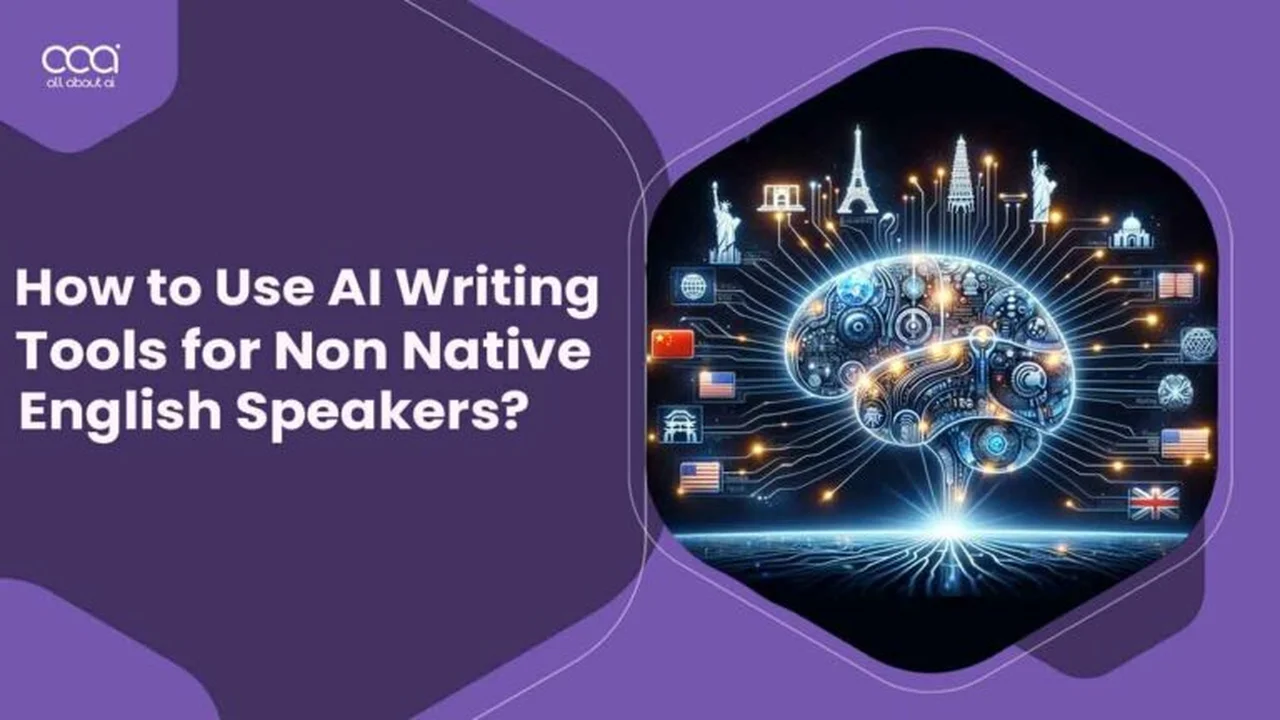
Discover AI tools that help non-native English speakers create professional and grammatically correct content with ease. For many individuals and small businesses operating in a globalized world, communicating effectively in English is crucial. However, if English isn't your first language, crafting compelling, error-free, and natural-sounding content can be a significant hurdle. This is where artificial intelligence steps in, offering a suite of powerful tools designed to bridge language gaps and empower non-native English speakers to produce high-quality content with confidence. These AI tools aren't just about fixing grammar; they're about refining style, enhancing clarity, and ensuring your message resonates with your target audience, whether for marketing, academic writing, or everyday business communication.
AI Content Creation for Non Native English Speakers
Why AI is a Game Changer for Non Native English Content Creators
The challenges faced by non-native English speakers in content creation are multifaceted. Beyond basic grammar and spelling, there are nuances of idiom, tone, cultural context, and stylistic preferences that can be difficult to master. Traditional translation tools often fall short, producing stiff or unnatural-sounding text. AI-powered writing assistants, however, leverage advanced natural language processing (NLP) and machine learning to understand context, suggest improvements, and even generate original content that sounds as if it were written by a native speaker. This capability is not just a convenience; it's a competitive advantage, allowing individuals and small businesses to expand their reach, engage diverse audiences, and maintain a professional image without the need for expensive human editors or translators for every piece of content.
Key Features to Look for in AI Writing Tools for Language Support
When selecting an AI writing tool to assist non-native English speakers, several features are particularly important. These go beyond basic spell-checking and delve into more sophisticated linguistic analysis and generation capabilities:
- Advanced Grammar and Punctuation Correction: Not just catching obvious errors, but also identifying complex grammatical mistakes, sentence structure issues, and appropriate punctuation usage.
- Style and Tone Suggestions: The ability to adapt content to different tones (e.g., formal, informal, persuasive, academic) and suggest stylistic improvements for clarity and impact.
- Vocabulary Enhancement and Synonym Suggestions: Helping users expand their vocabulary and choose the most appropriate words for context, avoiding repetitive language.
- Sentence Rephrasing and Simplification: Offering alternative ways to phrase sentences to improve readability, conciseness, or flow, which is especially helpful for complex ideas.
- Plagiarism Detection: Ensuring originality, which is crucial for academic and professional content.
- Readability Scores: Providing metrics to assess how easy the content is to understand, allowing for adjustments to target specific audiences.
- Contextual Understanding: The AI should be able to understand the broader context of the text to provide more relevant and accurate suggestions.
- Multilingual Support (Input/Output): While the focus is on English output, some tools can take input in other languages and refine it into professional English.
- Integration Capabilities: Seamless integration with popular writing platforms (e.g., Google Docs, Microsoft Word, WordPress) for a smooth workflow.
Top AI Tools for Non Native English Speakers Detailed Comparison
Let's dive into some of the leading AI tools that are particularly beneficial for non-native English speakers, comparing their features, use cases, and pricing.
Grammarly Premium The Gold Standard for English Refinement
Product Description: Grammarly is perhaps the most well-known AI writing assistant, offering comprehensive grammar, spelling, punctuation, clarity, engagement, and delivery suggestions. Its advanced algorithms go beyond basic corrections, providing context-specific advice to improve the overall quality and professionalism of your writing. For non-native speakers, it acts as an invaluable second pair of eyes, catching errors that even proficient speakers might miss and suggesting more natural phrasing.
Use Cases:
- Email Communication: Ensuring professional and clear emails for business correspondence.
- Academic Writing: Polishing essays, research papers, and theses for grammatical accuracy and academic tone.
- Business Reports and Proposals: Crafting error-free and persuasive documents.
- Content Marketing: Refining blog posts, articles, and website copy for readability and engagement.
- Social Media Posts: Ensuring concise and impactful messages.
Key Features for Non-Native Speakers:
- Advanced Grammar and Punctuation: Catches complex errors.
- Clarity-Focused Rewrites: Suggests rephrasing for better understanding.
- Vocabulary Enhancement: Offers synonyms and better word choices.
- Tone Detection: Helps ensure your message conveys the intended emotion.
- Plagiarism Checker: Essential for academic and professional integrity.
- Readability Score: Provides insights into how easy your text is to read.
Pricing:
- Free: Basic grammar, spelling, and punctuation.
- Premium: Starts at around $12/month (billed annually) for advanced features, style suggestions, and plagiarism detection.
- Business: Custom pricing for teams, including style guides and analytics.
Pros: Highly accurate, user-friendly interface, extensive integrations, excellent for overall writing improvement. Widely recognized and trusted.
Cons: Can sometimes be overly prescriptive, and the free version is limited. Does not generate content from scratch.
QuillBot AI Paraphrasing and Summarizing for Clarity
Product Description: QuillBot is an AI-powered paraphrasing tool that helps users rewrite sentences, paragraphs, or even entire articles while maintaining the original meaning. It offers various modes like Standard, Fluency, Creative, Formal, Shorten, and Expand, allowing non-native speakers to experiment with different styles and find the most natural-sounding expression. Beyond paraphrasing, it also includes a summarizer, grammar checker, and co-writer.
Use Cases:
- Rephrasing Complex Sentences: Simplifying difficult English structures.
- Avoiding Plagiarism: Rewriting sources in your own words for academic or research purposes.
- Improving Fluency: Making text sound more natural and less robotic.
- Summarizing Long Texts: Quickly extracting key information from articles or reports.
- Brainstorming Different Phrasing: Exploring various ways to express an idea.
Key Features for Non-Native Speakers:
- Multiple Paraphrasing Modes: Tailor the output to your specific needs.
- Synonym Slider: Control the level of vocabulary change.
- Grammar Checker: Basic error correction.
- Summarizer: Condense information efficiently.
- Co-Writer: An all-in-one writing environment with AI assistance.
Pricing:
- Free: Limited word count for paraphrasing and summarization.
- Premium: Starts at around $8.33/month (billed annually) for unlimited words, all modes, and faster processing.
Pros: Excellent for rephrasing and improving sentence structure, very intuitive, useful for avoiding accidental plagiarism, good for exploring different ways to say something.
Cons: Output can sometimes be generic or lose nuance if not carefully reviewed. Not a full-fledged content generator.
DeepL Write AI Powered Translation and Writing Assistant
Product Description: DeepL is renowned for its highly accurate and natural-sounding machine translation. DeepL Write extends this capability by offering an AI writing assistant that helps users refine their English text. It provides alternative phrasings, vocabulary suggestions, and grammatical corrections, focusing on making the text sound more natural and idiomatic. Its strength lies in its deep understanding of linguistic nuances, often outperforming other tools in producing human-like text.
Use Cases:
- Translating and Refining: Translating content from another language and then polishing the English output.
- Improving Sentence Flow: Making sentences connect more smoothly.
- Finding Natural Expressions: Suggesting idiomatic phrases and common collocations.
- Academic and Professional Writing: Ensuring high-quality, natural-sounding English.
Key Features for Non-Native Speakers:
- Contextual Rewrites: Offers alternative phrasings that fit the context.
- Vocabulary Suggestions: Helps choose more precise or natural words.
- Grammar and Punctuation: Corrects errors with high accuracy.
- Focus on Natural Language: Aims for human-like output.
Pricing:
- Free: Limited text input for writing assistance.
- DeepL Pro: Starts at around $8.74/month (billed annually) for unlimited text translation and more features, though specific DeepL Write premium tiers are still evolving.
Pros: Produces very natural and idiomatic English, excellent for refining translated text, strong contextual understanding.
Cons: Primarily focused on refinement rather than content generation. Less feature-rich than some dedicated writing assistants.
Jasper AI Content Generation for Marketing and Beyond
Product Description: Jasper, formerly Jarvis, is a powerful AI content generation tool designed to help users create a wide variety of content quickly. While not exclusively for non-native speakers, its ability to generate coherent, grammatically correct, and contextually relevant text from prompts makes it incredibly useful. Non-native speakers can use Jasper to generate initial drafts, brainstorm ideas, or rephrase existing content into professional English, significantly reducing the effort required to produce high-volume content.
Use Cases:
- Blog Post Generation: Creating outlines and full drafts of articles.
- Marketing Copy: Generating ad copy, social media posts, and email content.
- Website Content: Writing product descriptions, landing page copy, and FAQs.
- Creative Writing: Assisting with story ideas and narrative development.
- Content Repurposing: Transforming existing content into new formats.
Key Features for Non-Native Speakers:
- Templates for Various Content Types: Guides the user through different writing formats.
- Boss Mode: Allows for more direct control and longer-form content generation.
- Grammar and Spelling Correction: Built-in checks for accuracy.
- Tone of Voice Selection: Helps tailor the output to a desired tone.
- Multilingual Output: Can generate content in multiple languages, which can then be refined in English.
Pricing:
- Creator: Starts at $39/month (billed annually) for one user, unlimited words.
- Teams: Starts at $99/month (billed annually) for 3 users, with more features.
Pros: Excellent for generating large volumes of content, highly versatile with many templates, can significantly speed up content creation, produces high-quality initial drafts.
Cons: Can be more expensive than other tools. Requires careful prompting and editing to ensure the output perfectly matches intent and avoids generic phrasing. Not specifically designed for language learning or deep grammatical analysis.
Writer AI for Brand Consistency and Style Guides
Product Description: Writer (formerly Qordoba) is an AI writing assistant focused on helping teams maintain brand voice and consistency. While it offers general grammar and style suggestions, its unique strength lies in its ability to enforce custom style guides. For non-native speakers working within a company, this means they can ensure their English content adheres to specific corporate terminology, tone, and stylistic rules, making their writing indistinguishable from that of native-speaking colleagues.
Use Cases:
- Corporate Communications: Ensuring all internal and external communications align with brand guidelines.
- Technical Documentation: Maintaining consistent terminology and clarity in complex documents.
- Marketing and Sales Content: Producing on-brand messaging across all channels.
- Customer Support Content: Ensuring consistent and helpful responses.
Key Features for Non-Native Speakers:
- Custom Style Guides: Enforce specific vocabulary, grammar rules, and tone.
- Terminology Management: Ensures correct use of industry-specific or company-specific terms.
- Grammar and Spelling: Comprehensive error detection.
- Readability and Clarity Checks: Helps simplify complex sentences.
- Team Collaboration: Allows multiple users to work under the same guidelines.
Pricing:
- Free: Basic grammar and spelling.
- Team: Starts at $18/user/month (billed annually) for style guides, snippets, and more.
- Enterprise: Custom pricing for larger organizations with advanced features.
Pros: Excellent for maintaining brand consistency, highly customizable for specific needs, great for teams, helps non-native speakers quickly adapt to corporate writing standards.
Cons: More geared towards teams and brand consistency than individual general writing improvement. May be overkill for solo users without specific style guide requirements.
Practical Tips for Non Native English Speakers Using AI Tools
While AI tools are incredibly powerful, they are most effective when used strategically. Here are some tips for non-native English speakers to maximize their benefits:
- Start with Your Own Ideas: Don't rely solely on AI to generate content from scratch. Use your own knowledge and ideas as the foundation, then use AI to refine and enhance.
- Review and Edit Critically: AI is a tool, not a replacement for human judgment. Always review the AI's suggestions and output. Sometimes, a suggestion might be grammatically correct but not convey your intended meaning or tone.
- Understand the 'Why': When an AI tool suggests a correction or rephrasing, try to understand the underlying grammatical rule or stylistic principle. This will help you improve your own English skills over time.
- Use Multiple Tools: Different AI tools excel at different things. You might use Jasper for initial content generation, then Grammarly for detailed proofreading, and QuillBot for rephrasing specific sentences.
- Learn from the Feedback: Pay attention to the types of errors the AI consistently flags. This can highlight areas where you need to improve your English proficiency.
- Be Specific with Prompts (for generative AI): When using tools like Jasper, the more detailed and specific your prompts, the better the output will be. Provide context, desired tone, and key points.
- Don't Over-Optimize: While AI can help with SEO, don't let it make your content sound unnatural or keyword-stuffed. Focus on clear, valuable content first.
- Consider Your Audience: Always keep your target audience in mind. An AI might suggest very formal language, but if your audience is casual, you'll need to adjust.
The Future of AI in Language Learning and Content Creation
The landscape of AI writing tools is constantly evolving. We can expect even more sophisticated features in the future, including:
- More Nuanced Contextual Understanding: AI will become even better at understanding the subtle meanings and implications of text.
- Personalized Language Learning Paths: Tools might offer tailored exercises and feedback based on a user's specific language weaknesses.
- Real-time Multilingual Collaboration: Seamless translation and refinement in collaborative writing environments.
- Voice-to-Text and Text-to-Voice with AI Refinement: Improving spoken and written communication simultaneously.
- Integration with Brain-Computer Interfaces: Potentially allowing for thought-to-text generation with AI refinement.
For non-native English speakers, these advancements promise an even more accessible and efficient path to mastering English content creation. The goal isn't to replace human creativity or intelligence, but to augment it, providing the tools necessary to communicate effectively and confidently in a global language.
Choosing the Right AI Tool for Your English Content Needs
The best AI tool for you will depend on your specific needs and budget. If your primary goal is to ensure grammatical accuracy and improve the overall clarity and style of your existing English text, Grammarly Premium is an excellent choice. If you frequently need to rephrase sentences, summarize content, or avoid plagiarism, QuillBot offers powerful solutions. For those who need to generate a lot of content from scratch or brainstorm ideas, Jasper is a robust option. If you're part of a team and need to enforce specific brand guidelines and terminology, Writer stands out. And for highly natural and idiomatic English refinement, especially after translation, DeepL Write is a strong contender.
Many of these tools offer free versions or trials, so it's highly recommended to experiment with a few to see which one best fits your workflow and helps you achieve your content creation goals. By strategically leveraging these AI tools, non-native English speakers can overcome language barriers, produce professional-grade content, and confidently engage with a global audience.
:max_bytes(150000):strip_icc()/277019-baked-pork-chops-with-cream-of-mushroom-soup-DDMFS-beauty-4x3-BG-7505-5762b731cf30447d9cbbbbbf387beafa.jpg)