AI Tools for Data Entry and Organization
Automate data entry and improve data organization with AI tools, reducing errors and increasing efficiency.
Automate data entry and improve data organization with AI tools, reducing errors and increasing efficiency. In today's fast-paced business world, data is king. But let's be honest, manually entering and organizing all that data can feel like a never-ending chore. It's tedious, time-consuming, and prone to human error. That's where AI tools for data entry and organization come in, acting as your digital assistants to streamline these crucial tasks, boost accuracy, and free up your team for more strategic work. Whether you're a small business owner juggling multiple responsibilities or an individual looking to optimize your personal workflow, AI can be a game-changer.
AI Tools for Data Entry and Organization
Let's dive into how artificial intelligence is revolutionizing the way we handle information, making data management not just efficient but also surprisingly simple. We'll explore various types of AI tools, their practical applications, and even compare some popular options to help you pick the best fit for your needs.
Understanding AI Powered Data Entry Automation
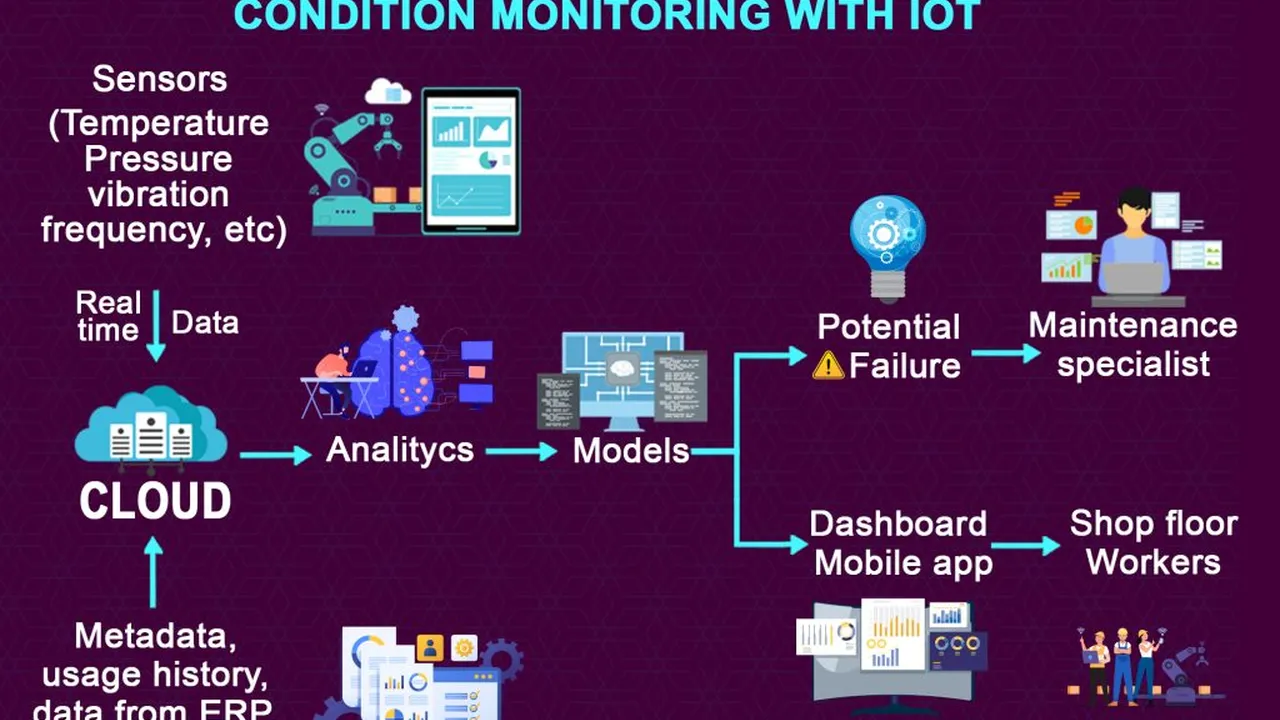
So, what exactly is AI-powered data entry? Imagine having a super-smart assistant that can read documents, extract relevant information, and input it into your systems without you lifting a finger. That's essentially what these tools do. They leverage technologies like Optical Character Recognition (OCR), Natural Language Processing (NLP), and machine learning to understand and process data from various sources.
How AI Transforms Manual Data Input Processes
Traditionally, data entry involved someone typing information from physical or digital documents into a database or spreadsheet. This process is slow, expensive, and often leads to mistakes. AI tools, however, can:
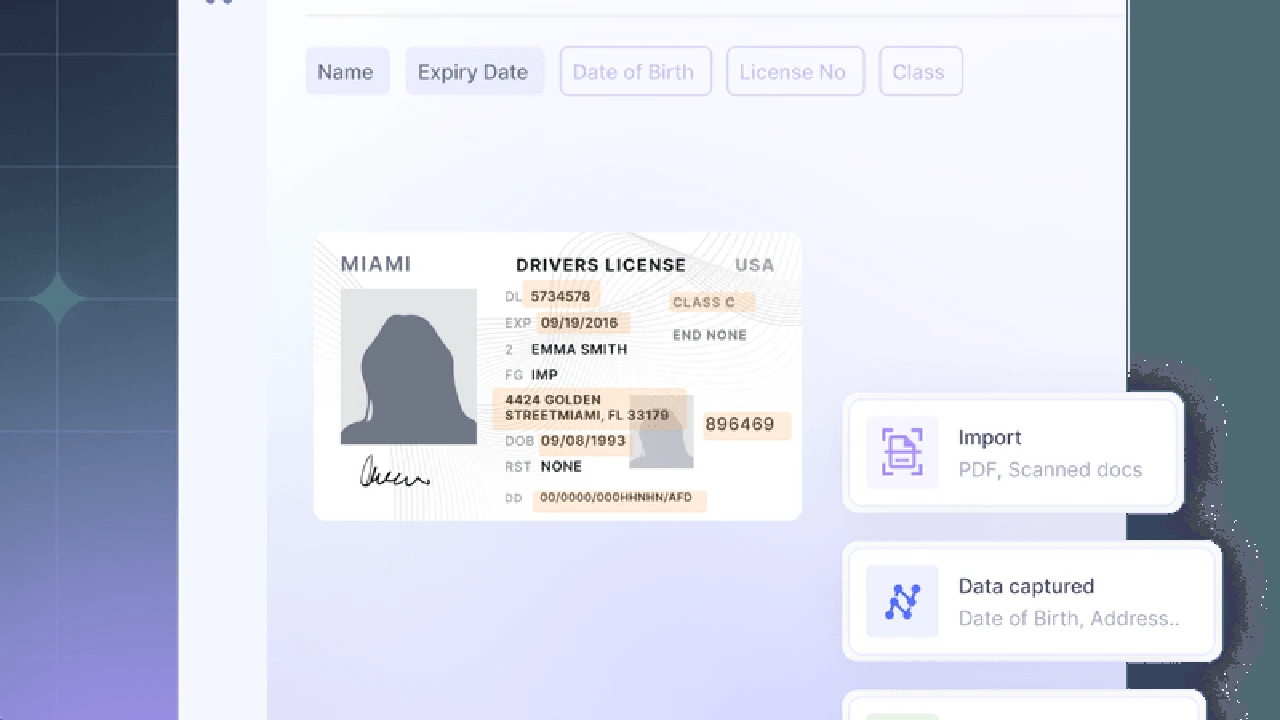
- Read and Interpret: They can scan invoices, receipts, forms, and even handwritten notes, understanding the context and identifying key data points.
- Extract and Categorize: Once identified, the data is extracted and automatically categorized into predefined fields in your CRM, ERP, or accounting software.
- Validate and Verify: Many AI tools include validation features to cross-reference data, ensuring accuracy and flagging inconsistencies.
- Learn and Adapt: Through machine learning, these tools continuously improve their accuracy over time, learning from new data and user corrections.
Key Benefits of AI for Data Organization and Management
The advantages of adopting AI for data entry and organization extend far beyond just saving time. Let's break down the core benefits:
Increased Accuracy and Reduced Human Error in Data Handling
Human error is inevitable, especially with repetitive tasks like data entry. A misplaced decimal or a misspelled name can have significant consequences. AI tools, once trained, perform with remarkable consistency and accuracy, drastically reducing the likelihood of such errors. This means cleaner data, more reliable reports, and better decision-making.
Significant Time and Cost Savings for Small Businesses
Think about the hours your team spends on manual data entry each week. Those hours translate directly into labor costs. By automating these tasks, AI tools free up your employees to focus on higher-value activities that directly contribute to business growth. This efficiency gain can lead to substantial cost savings and a more productive workforce.
Enhanced Data Accessibility and Searchability with AI
When data is properly organized and categorized by AI, it becomes much easier to access and search. No more sifting through piles of documents or endless spreadsheets. AI-powered indexing and tagging ensure that you can quickly find the information you need, when you need it, improving overall operational efficiency.
Improved Compliance and Data Security Measures
Many AI data organization tools come with built-in features for compliance and security. They can help ensure that sensitive data is handled according to regulations (like GDPR or HIPAA) and often offer robust encryption and access controls, reducing the risk of data breaches.
Top AI Tools for Data Entry and Organization Solutions
Alright, let's get to the exciting part: specific tools! The market is brimming with AI solutions, each with its unique strengths. Here are some of the best options for individuals and small businesses, along with their typical use cases and pricing structures.
1. Kofax Capture Intelligent Document Processing
Kofax is a veteran in the intelligent automation space, offering powerful solutions for document capture and processing. While often associated with larger enterprises, they have scalable options that can benefit small businesses with significant document volumes.
- Use Cases: Automating invoice processing, expense report management, customer onboarding forms, legal document processing, and any scenario involving high volumes of structured or semi-structured documents.
- Key Features: Advanced OCR and ICR (Intelligent Character Recognition), machine learning for continuous improvement, robust workflow automation, integration with various business systems (ERP, CRM), and strong data validation capabilities.
- Pros: Highly accurate, handles complex document types, scalable, comprehensive feature set.
- Cons: Can have a steeper learning curve, potentially higher cost for full-fledged solutions, might be overkill for very small businesses with minimal data entry needs.
- Pricing: Kofax typically offers enterprise-level pricing, which is often custom-quoted based on volume and features. Expect a significant investment, likely starting in the thousands of dollars annually for a comprehensive solution. They might have more modular options for smaller businesses, so direct inquiry is recommended.
2. ABBYY FineReader PDF and ABBYY FlexiCapture
ABBYY is another industry leader known for its exceptional OCR technology. FineReader PDF is a desktop solution perfect for individuals and small teams, while FlexiCapture offers more advanced, server-based intelligent document processing.
- Use Cases (FineReader PDF): Converting scanned documents and PDFs into editable formats (Word, Excel), digitizing paper archives, extracting data from tables, and basic document comparison.
- Use Cases (FlexiCapture): Automating data extraction from invoices, purchase orders, contracts, and other business documents at scale, integrating with back-office systems, and handling complex document layouts.
- Key Features (FineReader PDF): Industry-leading OCR accuracy, PDF editing and conversion, document comparison, batch processing.
- Key Features (FlexiCapture): AI-powered data extraction, classification, machine learning, robust validation rules, integration APIs, and scalability for high-volume processing.
- Pros: Excellent OCR accuracy, user-friendly interface (FineReader), powerful and flexible (FlexiCapture), supports many languages.
- Cons: FlexiCapture can be complex to set up, FineReader is more of a conversion tool than a full automation platform.
- Pricing (FineReader PDF): A one-time purchase for a perpetual license typically ranges from $199 to $399, depending on the edition (Standard, Corporate). Subscription options might also be available.
- Pricing (FlexiCapture): Similar to Kofax, FlexiCapture is an enterprise solution with custom pricing based on document volume, number of users, and specific features. Expect costs to be in the thousands annually.
3. Nanonets AI Powered Document Automation
Nanonets is a modern, cloud-based AI platform that focuses on intelligent document processing (IDP). It's particularly well-suited for small to medium-sized businesses due to its user-friendly interface and flexible pricing.
- Use Cases: Automating invoice processing, receipt scanning, purchase order extraction, KYC (Know Your Customer) document processing, and any form of data extraction from unstructured or semi-structured documents.
- Key Features: AI-powered OCR, custom model training (you can teach it to extract data from unique document types), workflow automation, integration with popular apps (Zapier, Google Drive, accounting software), and a strong focus on accuracy.
- Pros: Easy to set up and use, highly accurate, flexible and customizable, cloud-based (no software installation), good for various document types.
- Cons: Can be more expensive than basic OCR tools if you have very high volumes, custom model training requires some initial effort.
- Pricing: Nanonets offers tiered pricing, often based on the number of documents processed per month. A 'Starter' plan might begin around $49-$99/month for a limited number of documents, scaling up to 'Pro' and 'Enterprise' plans that can cost several hundred to thousands per month depending on volume and features. They often offer a free trial.
4. DocuWare Intelligent Indexing and Workflow Automation
DocuWare is a comprehensive document management system that incorporates AI for intelligent indexing and workflow automation. It's designed to manage the entire lifecycle of documents, from capture to archiving.
- Use Cases: Digitizing and organizing all business documents (invoices, contracts, HR files, customer records), automating approval workflows, ensuring compliance, and providing secure access to information.
- Key Features: AI-powered intelligent indexing (automatically suggests index terms), robust document management, workflow automation, secure cloud storage, mobile access, and integration with various business applications.
- Pros: All-in-one document management solution, strong security features, excellent for compliance, improves collaboration.
- Cons: Can be a more extensive implementation than standalone data entry tools, pricing can add up for smaller businesses.
- Pricing: DocuWare typically uses a subscription model based on the number of users and storage capacity. A basic plan for a small team might start around $250-$500 per month, with costs increasing significantly for more users, storage, and advanced features.
5. Zapier and Make formerly Integromat with AI Integrations
While not standalone AI data entry tools, Zapier and Make are powerful automation platforms that can connect various AI services and data sources. They act as the glue, allowing you to build custom AI-powered data entry and organization workflows.
- Use Cases: Connecting an OCR tool (like Google Cloud Vision or Amazon Textract) to a spreadsheet or CRM, automating data transfer between different applications, triggering actions based on extracted data, and creating custom data pipelines.
- Key Features: Thousands of app integrations, visual workflow builders, conditional logic, scheduling, and the ability to integrate with AI services for specific tasks (e.g., extracting data, classifying text).
- Pros: Extremely flexible, highly customizable, can connect almost any app, cost-effective for specific automation needs.
- Cons: Requires some technical understanding to set up complex workflows, relies on integrating with other AI services for the actual data extraction.
- Pricing (Zapier): Free plan for basic tasks. Paid plans start around $19.99/month for 750 tasks, scaling up to $49/month for 2,000 tasks, and enterprise plans for higher volumes.
- Pricing (Make): Free plan for basic tasks. Paid plans start around $9/month for 10,000 operations, scaling up to $29/month for 40,000 operations, and enterprise plans.
Practical Applications of AI in Data Organization for Small Businesses
Now that we've looked at some tools, let's explore how small businesses can actually put AI to work in their day-to-day operations.
Automating Invoice Processing and Expense Management
This is one of the most common and impactful applications. AI tools can automatically extract vendor names, invoice numbers, dates, line items, and amounts from invoices and receipts. This data can then be directly fed into your accounting software (like QuickBooks or Xero), eliminating manual entry, speeding up reconciliation, and reducing errors. Imagine no more late payments or lost receipts!
Streamlining Customer Onboarding and CRM Data Entry
When a new customer signs up, there's often a lot of data to enter into your CRM. AI can process application forms, contracts, and other documents, extracting customer details and populating your CRM fields automatically. This not only saves time but also ensures that customer records are accurate and up-to-date from day one, leading to better customer service and personalized interactions.
Digitizing and Organizing Paper Documents and Archives
Many small businesses still deal with a significant amount of paper. AI-powered OCR tools can convert these physical documents into searchable digital files. Beyond just scanning, AI can then intelligently index these documents, tagging them with relevant keywords and categories, making your entire archive easily searchable and accessible. This is a huge step towards a paperless office.
Enhancing Inventory Management and Supply Chain Data
For businesses dealing with physical products, accurate inventory data is crucial. AI can help by processing packing slips, delivery notes, and order forms, automatically updating stock levels in your inventory management system. This reduces manual counting errors, provides real-time inventory visibility, and helps optimize ordering processes, preventing both stockouts and overstocking.
Improving HR Document Processing and Employee Records
HR departments handle a lot of sensitive data, from resumes and application forms to employee contracts and performance reviews. AI can automate the extraction of key information from these documents, populating HR systems and ensuring that employee records are complete and compliant. This frees up HR staff to focus on more strategic initiatives like talent development and employee engagement.
Choosing the Right AI Data Entry and Organization Tool for Your Business
With so many options, how do you pick the best one? It comes down to understanding your specific needs and budget.
Assessing Your Data Volume and Document Types
Do you process hundreds of invoices a day, or just a few dozen a month? Are your documents mostly standardized forms, or do they vary wildly in layout? High volumes and complex, unstructured documents will require more robust, AI-driven IDP solutions like Nanonets or ABBYY FlexiCapture. For lower volumes and more structured documents, simpler OCR tools or even Zapier integrations might suffice.
Considering Integration with Existing Business Systems
An AI tool is most effective when it integrates seamlessly with your current software stack – your CRM, ERP, accounting software, or document management system. Check for native integrations or compatibility with automation platforms like Zapier or Make. This ensures a smooth data flow and avoids creating new data silos.
Evaluating Ease of Use and Customization Options
How tech-savvy is your team? Some tools are designed for ease of use with intuitive interfaces, while others require more technical expertise for setup and customization. If you have unique document types, look for tools that allow you to train custom AI models, like Nanonets, to ensure accurate extraction.
Understanding Pricing Models and Scalability for Growth
AI tools often come with different pricing models: per document, per user, or subscription tiers. Consider your current budget and how the cost might scale as your business grows. Cloud-based solutions are generally more scalable and require less upfront IT investment.
Future Trends in AI for Data Management and Automation
The world of AI is constantly evolving, and data management is no exception. Here's a glimpse into what's next:
Hyperautomation and Intelligent Process Automation
We're moving beyond just automating individual tasks to automating entire end-to-end business processes. Hyperautomation combines AI, machine learning, robotic process automation (RPA), and other technologies to create highly intelligent and adaptive automation solutions that can handle complex workflows with minimal human intervention.
Enhanced AI for Unstructured Data Processing
While current AI is great with structured and semi-structured data, the next frontier is mastering unstructured data – think emails, social media posts, voice recordings, and videos. Advanced NLP and machine learning models will become even better at understanding context, sentiment, and extracting valuable insights from these diverse data sources.
Increased Focus on Ethical AI and Data Governance
As AI becomes more pervasive in data management, there will be an even greater emphasis on ethical considerations and robust data governance. This includes ensuring data privacy, preventing algorithmic bias, and maintaining transparency in how AI processes and uses information. Businesses will need to be mindful of these aspects to build trust and comply with evolving regulations.
Embracing AI tools for data entry and organization isn't just about staying competitive; it's about transforming your business operations for greater efficiency, accuracy, and strategic focus. By leveraging these intelligent assistants, you can turn the tedious task of data management into a powerful asset that drives growth and innovation.
:max_bytes(150000):strip_icc()/277019-baked-pork-chops-with-cream-of-mushroom-soup-DDMFS-beauty-4x3-BG-7505-5762b731cf30447d9cbbbbbf387beafa.jpg)